
How a winter storm, a generous local family, and an unforgettable storyteller helped inspire an American comedy legend
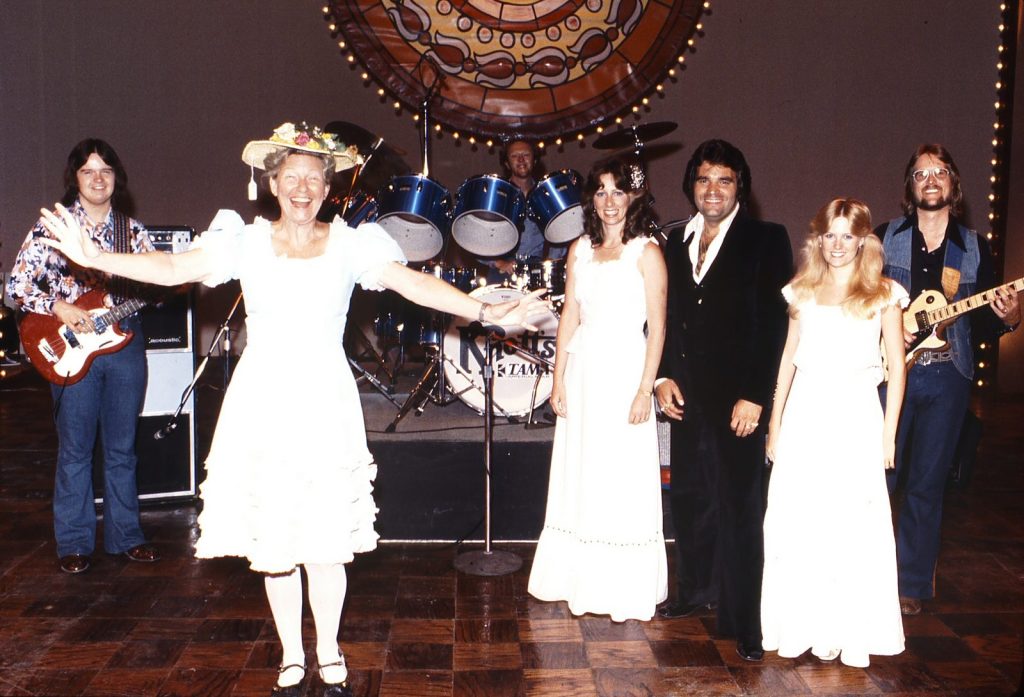

Sarah Ophelia Colley was born in Tennessee. But the comic character who made her famous took shape from experiences gathered across the South, and one decisive encounter in Baileyton, Alabama, in the winter of 1936.
A Young Director Arrives in a Winter Storm
Before audiences knew the flowered hat, the dangling price tag, and the joyful greeting of Minnie Pearl, Sarah Ophelia Colley was a trained young performer from Centerville, Tennessee. She had studied theater and dance at Nashville’s Ward-Belmont School and hoped to build a life on the stage.
During the Great Depression, Colley joined the Wayne P. Sewell Production Company of Atlanta. The company sent directors into Southern communities to cast local residents, rehearse an amateur play in a short period, and stage it as a fundraiser. The work demanded confidence, organization, and an ear for the people and stories of each town.
The Baileyton Assignment
In January 1936, Colley traveled from an assignment in Virginia to Cullman County to direct The Flapper Grandmother. Historical accounts connect the production with local school fundraising in the Baileyton-Joppa area, and detailed archival research places the performances at Baileyton School on January 29 and 30.
Her arrival was anything but easy. Bitter weather and icy roads had settled over north Alabama. When Colley reached the Cullman railroad station, no one was waiting to meet her. Baileyton lay roughly 15 miles away. She reportedly had seven dollars, paid a driver five dollars to take her over the hazardous roads, and arrived with only two dollars and without her costume trunk, which had to follow later.
At Baileyton School, she learned that the principal had not expected her to make the journey. The teacherage was full, no room had been prepared, and darkness was approaching. The road back to Cullman was dangerous. A local family was suggested: Jim and Mattie Burden.
The Burdens Open Their Door
James Monroe “Jim” Burden and Martha Matilda “Mattie” Butler Burden lived near Baileyton with their youngest son, Lester Kyle Burden, whom the family called “Brother.” They welcomed the stranded visitor, and Brother gave up his sleeping quarters so she would have a place to stay.
The practical kindness of the Burden household gave Colley shelter. Mattie’s personality gave her something more enduring. Remembered locally as “Aunt Mat,” Mattie was a natural storyteller with a distinctive way of speaking and an ability to find humor in everyday life. Later family research also remembered her as a midwife and caregiver who helped neighbors through births, illness, and hardship.
Two Women from Different Worlds
Colley came from a relatively prosperous family and had received formal training in theater, dance, and speech. Mattie had built a life around rural work, family, and service to neighbors. Yet the two connected quickly. Mattie fed and mothered the young visitor, and Colley listened closely to her stories, expressions, rhythm, and humor.
One remembered episode concerned a generous lunch of biscuits, pork, egg, and fried peach pies wrapped in newspaper. When the ink marked the food, Colley could not bring herself to eat it and used her last two dollars to buy cheese and crackers. Mattie’s response was not offense; she worried that her guest was simply unaccustomed to the meal and arranged something different the next day. The story captures both the cultural distance between the women and the warmth that bridged it.
The Show Goes On
Colley’s trunk eventually arrived. She assembled the local cast, led rehearsals, and brought the production to the stage. At the close of the final performance, cast members presented her with red roses. In later recollections, she marveled that people in a rural Alabama community had found roses in the middle of winter.
Taking Baileyton with Her
When it was time for Colley to leave, Mattie reportedly told her, “You’re just like one of us.” The visit had lasted only days, but Colley carried away Mattie’s stories, voice, warmth, and comic timing.
Colley began entertaining friends and audiences with stories and speech patterns drawn from the older Alabama woman. The response encouraged her to develop the material. Over the next several years, experiences and people from other communities also contributed to the act, but Baileyton remained the clearest early turning point in the character’s formation.
Keep Her Kind
Colley’s father supported the act but urged her to portray rural people with affection instead of cruelty. That principle became essential to Minnie Pearl. The jokes exaggerated romance, relatives, gossip, and small-town life, but the character’s heart came from recognition and warmth. Her audiences could feel that she laughed with them.
A Character Finds Her Name
By 1939, Colley was ready to present the act professionally at an event in Aiken, South Carolina. She assembled an old-fashioned costume, including the straw hat that would become her trademark, and combined two names encountered during her travels: Minnie Pearl.
On November 30, 1940, she debuted at the Grand Ole Opry. The response launched an association lasting about half a century. Minnie Pearl later became a national television favorite, a longtime cast member of Hee Haw, a 1975 inductee into the Country Music Hall of Fame, and a recipient of the National Medal of Arts in 1992.
Sarah Ophelia Colley was born in Tennessee. But Minnie Pearl began in Baileyton, Alabama.
Baileyton Remembered on National Television
Baileyton’s place in the story is not only a local tradition. During Minnie Pearl’s 1957 appearance on NBC’s This Is Your Life, Colley herself identified Baileyton while remembering the Alabama family that housed her. The archival exchange survives in the PBS documentary Facing the Laughter: Minnie Pearl. She recalled the woman, her husband, and the son called Brother, and spoke of Mattie with deep affection.
That testimony matters: the performer herself publicly connected Baileyton to the experience that helped form her character. It also supports the careful way the Town tells the story. Baileyton was not Colley’s birthplace, and Minnie Pearl did not emerge fully formed from a single model. The character developed over time from many encounters. Yet Colley’s own memories and later archival research identify the Burden home and the 1936 visit as a foundational moment.
A Bittersweet Ending
Colley apparently never saw Mattie again. Mattie died in 1939, just as the developing country character began moving onto professional stages. She did not live to see Minnie Pearl’s Opry debut, national television career, or enduring fame. Even so, something of her hospitality, humor, and voice lived on in the character audiences loved.
Preserving the History
The Burden family kept the story alive across generations. In 2023, Wallace State Community College’s genealogy program assisted historian Rachel Louise Martin in locating the Burden home, studying newspapers and local records, and connecting with descendants. Martin’s research offered the most detailed modern reconstruction of Colley’s Baileyton visit.
The episode has also received book-length scholarly attention. Mary Ellen Pethel and Don Cusic’s 2025 biography, Howdy! The Minnie Pearl Story, devotes a chapter to the period from Baileyton to the character’s emergence in Nashville.
Baileyton Before Incorporation
In 1936, Baileyton was a long-established rural community, but not yet an incorporated town. The community had grown from nineteenth-century settlement and took its name from Robert Bailey, who established a homestead in the area around 1870 and operated a cotton gin. A post office opened in the early 1880s, and residents built an early school around 1885.
The Town of Baileyton incorporated in 1973. The Minnie Pearl story therefore belongs to the community’s history 37 years before municipal incorporation, a reminder that a town’s identity begins long before its government is formally organized.
Why This Story Belongs to Baileyton
A winter storm brought a young theater director to Baileyton under difficult circumstances. A local family opened its home. An older storyteller shared her humor and humanity. The visitor listened, remembered, and transformed those memories into art.
Baileyton’s claim is therefore both proud and precise: not that Sarah Ophelia Colley was born here, but that this community provided the decisive early inspiration for Minnie Pearl. It is a story about art, but also about hospitality: about how an ordinary act of welcome in a small Alabama community helped shape an extraordinary American career.
Historical research compiled for the Town of Baileyton from the recollections of Sarah Ophelia Colley Cannon; archival and biographical sources; the research of Rachel Louise Martin; Wallace State Community College’s genealogy program; and Burden family history.
Sources and Further Reading
- Primary memoir: Minnie Pearl [Sarah Ophelia Colley Cannon], with Joan Dew. Minnie Pearl: An Autobiography. Simon & Schuster, 1980. Bibliographic record noted by the Library of Congress National Library Service.
- Major historical research: Rachel Louise Martin. “Before the Howdy: Finding Minnie Pearl.” Oxford American, Issue 121, Summer 2023. A detailed reconstruction using archival records, Colley’s autobiography, and interviews with Burden descendants.
- Local genealogy research: Gail Crutchfield. “Genealogy program helps writer research local family that influenced Minnie Pearl.” Wallace State Community College, March 17, 2023.
- Authoritative career biography: Country Music Hall of Fame and Museum. “Minnie Pearl.” Covers Colley’s training, touring work, Opry debut, career, honors, and legacy.
- Archival television: PBS. Facing the Laughter: Minnie Pearl. Includes archival material from the 1957 This Is Your Life appearance in which Colley discusses Baileyton and the family who housed her.
- Cullman County local history: “Minnie Pearl – Straight Outta Baileyton.” The Cullman Tribune, June 19, 2016. Includes local Burden family history and Baileyton’s longstanding account of the visit.
- Baileyton history: James P. Kaetz. “Baileyton.” Encyclopedia of Alabama, Auburn University. Covers settlement, the post office, early schools, and incorporation.
- Recent biography: Mary Ellen Pethel and Don Cusic. Howdy! The Minnie Pearl Story. University of Tennessee Press, 2025. Includes the chapter “The Birth of Minnie Pearl: Baileyton to Broadway (Nashville), 1936–1940.”
Image credit: “Minnie Pearl performs at Knott’s Berry Farm.” Photographer unknown; photograph courtesy of Orange County Archives. Source: Wikimedia Commons, File:MinniePearlKBF.jpg. Licensed under Creative Commons Attribution 2.0 Generic. The image was scaled and proportionally cropped for this publication.
Editorial note: This feature distinguishes Sarah Ophelia Colley’s Tennessee birthplace from Baileyton’s role as a formative birthplace of the Minnie Pearl character. Statements based on reconstruction or family tradition are identified with measured language.